
Designing for lifelong learning
Architecture has the ability to support learning throughout every stage of life, and we’ve been exploring this idea further at one our recent Design Research sessions. Our team examined projects from Australia and around the world that challenge traditional ideas of education, and we found some interesting insights.
Although each project responded to a different place, culture and community, they all shared a common thread: learning isn't confined to ordinary classrooms. It happens through movement, nature, independence, community and cultural exchange, and architecture has a powerful role to play in creating the conditions for those experiences.
Rather than simply housing education, these projects demonstrate how thoughtful design can encourage curiosity, confidence and connection over a lifetime.
Designing for autonomy and choice
For students with diverse learning needs, the environment can play an important role in supporting independence and self-regulation.
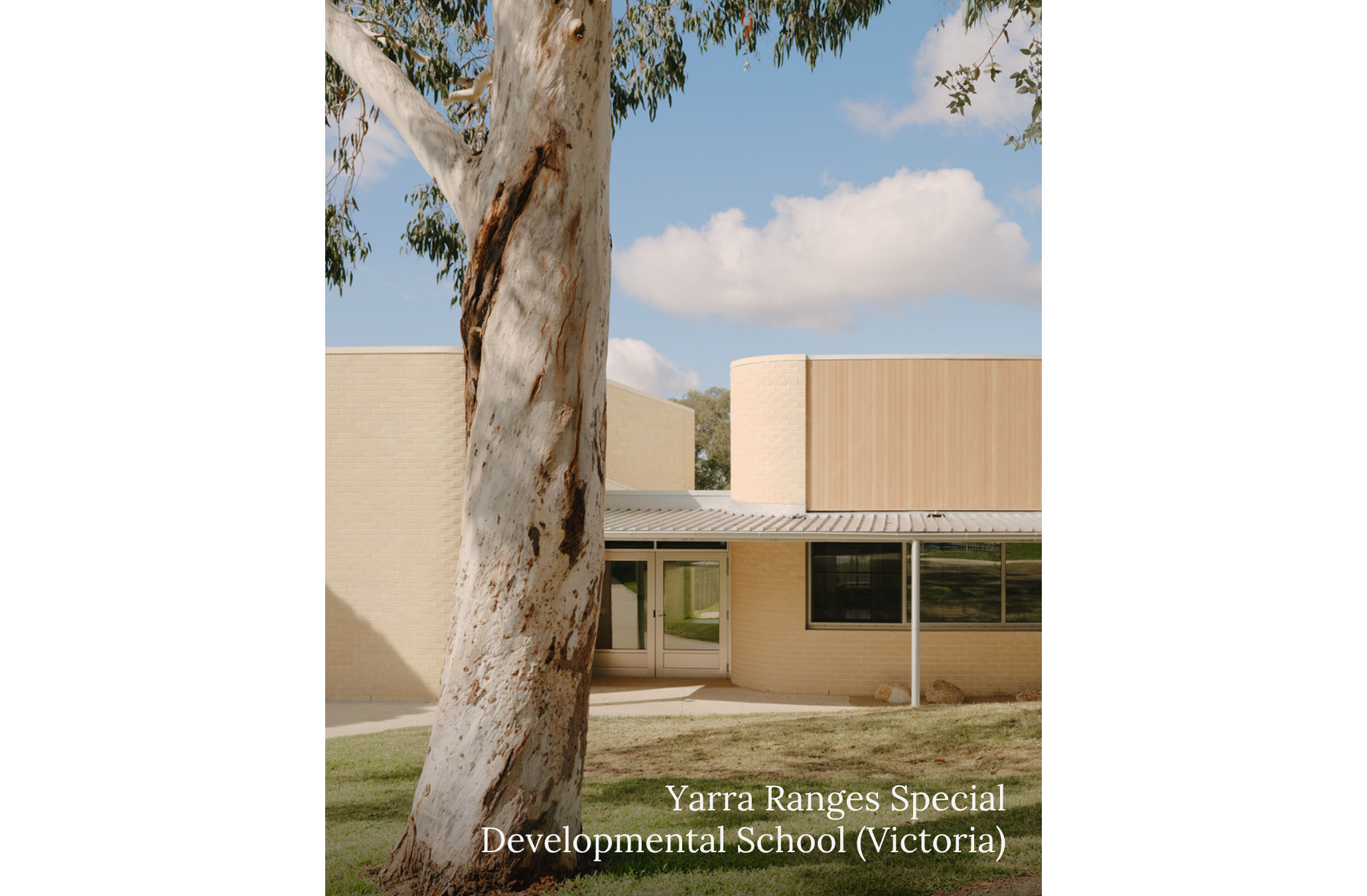
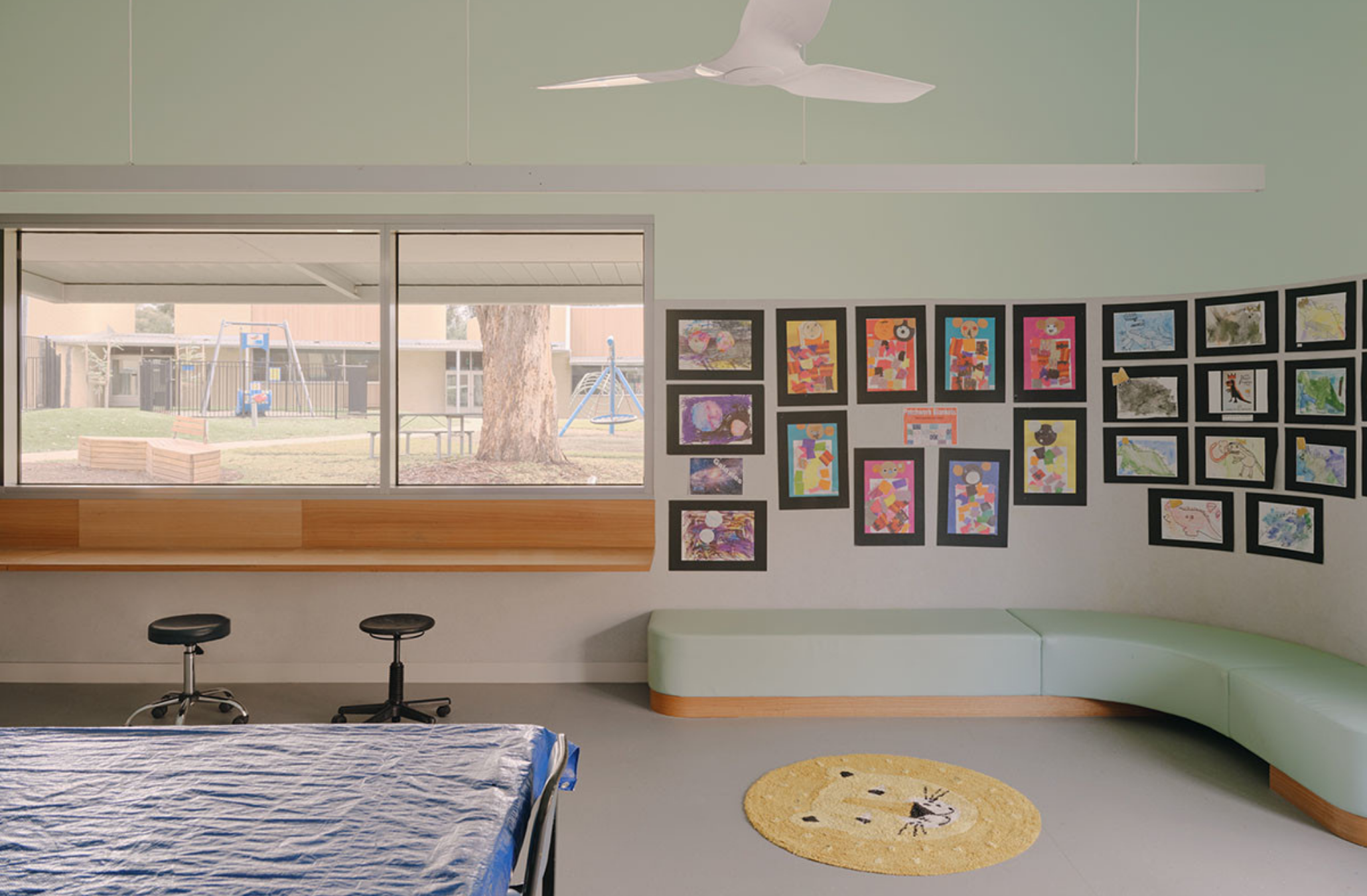
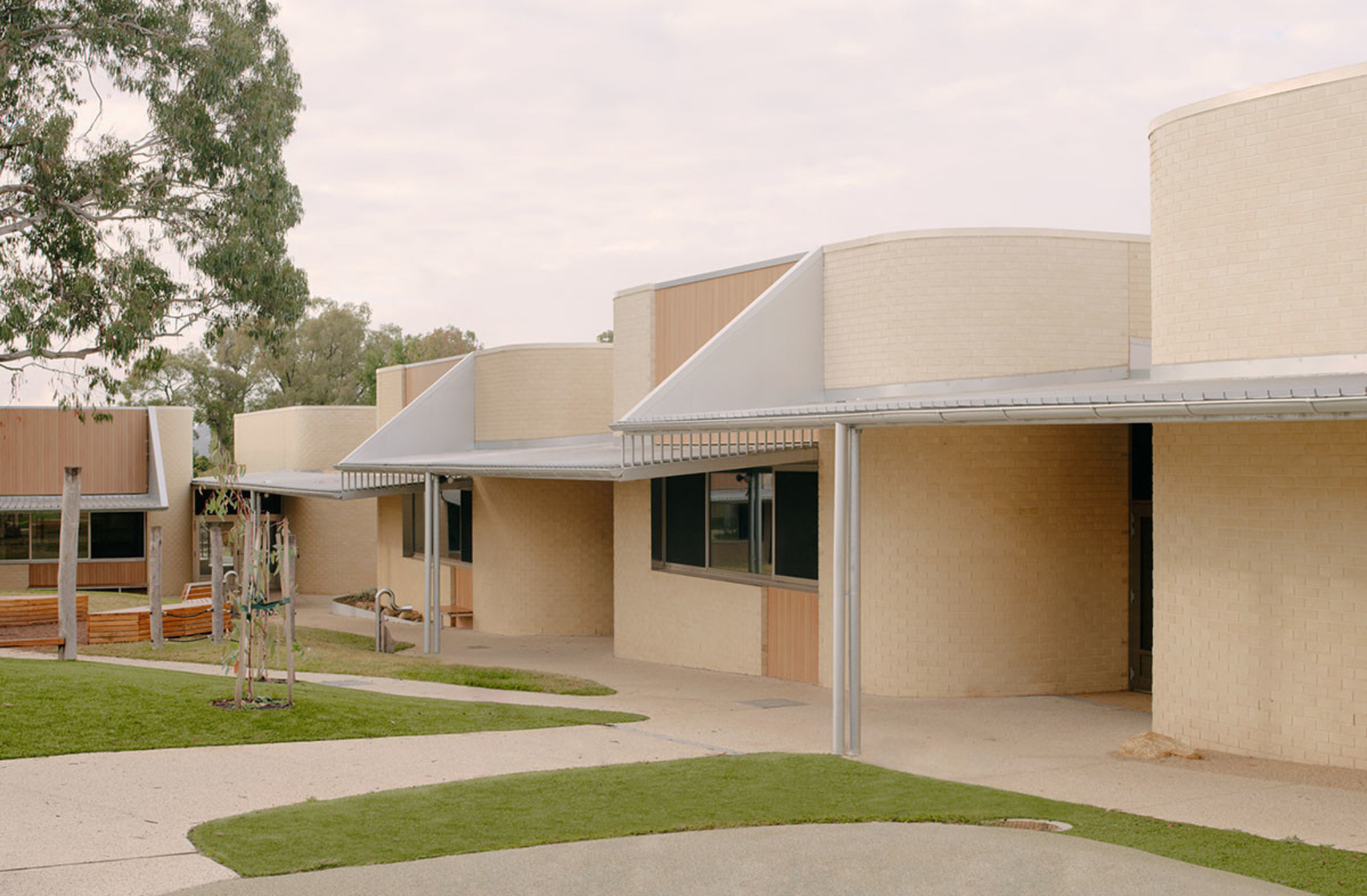
The redevelopment of a special school in Victoria’s Yarra Ranges (Architecture architecture) replaces outdated transportable classrooms with a campus designed around choice and connection. A central courtyard forms the heart of the school, with teaching “pods” of six to seven desks arranged around shared classroom spaces.
Rather than separating quiet areas into dedicated rooms, retreat nooks are integrated into learning spaces, allowing students to step away, reset and re-engage when they need to. Foyer spaces between classrooms provide each pod with views to the courtyard, while the contrast between the protective exterior and soft, green interior creates a sense of comfort and calm.
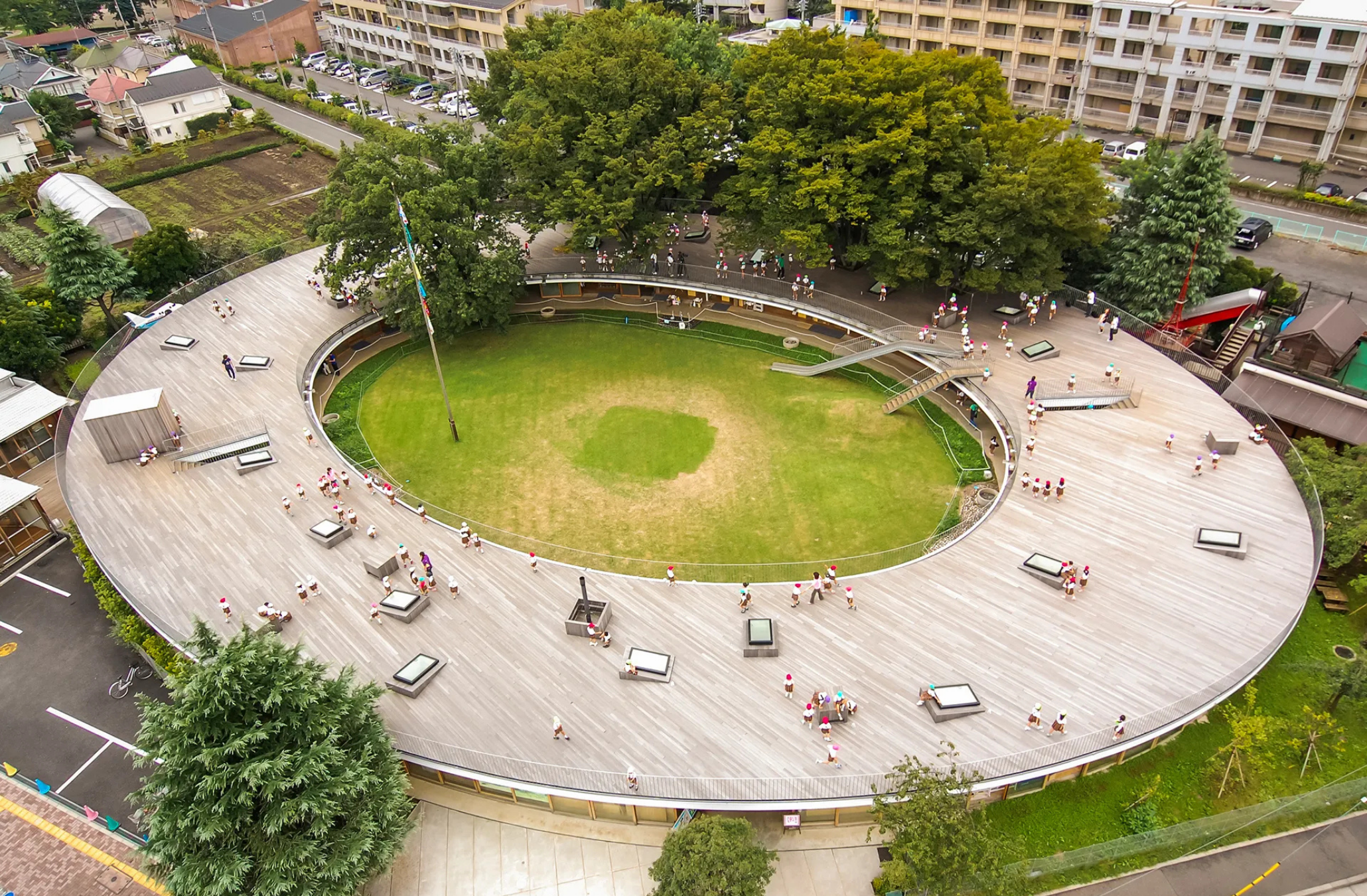
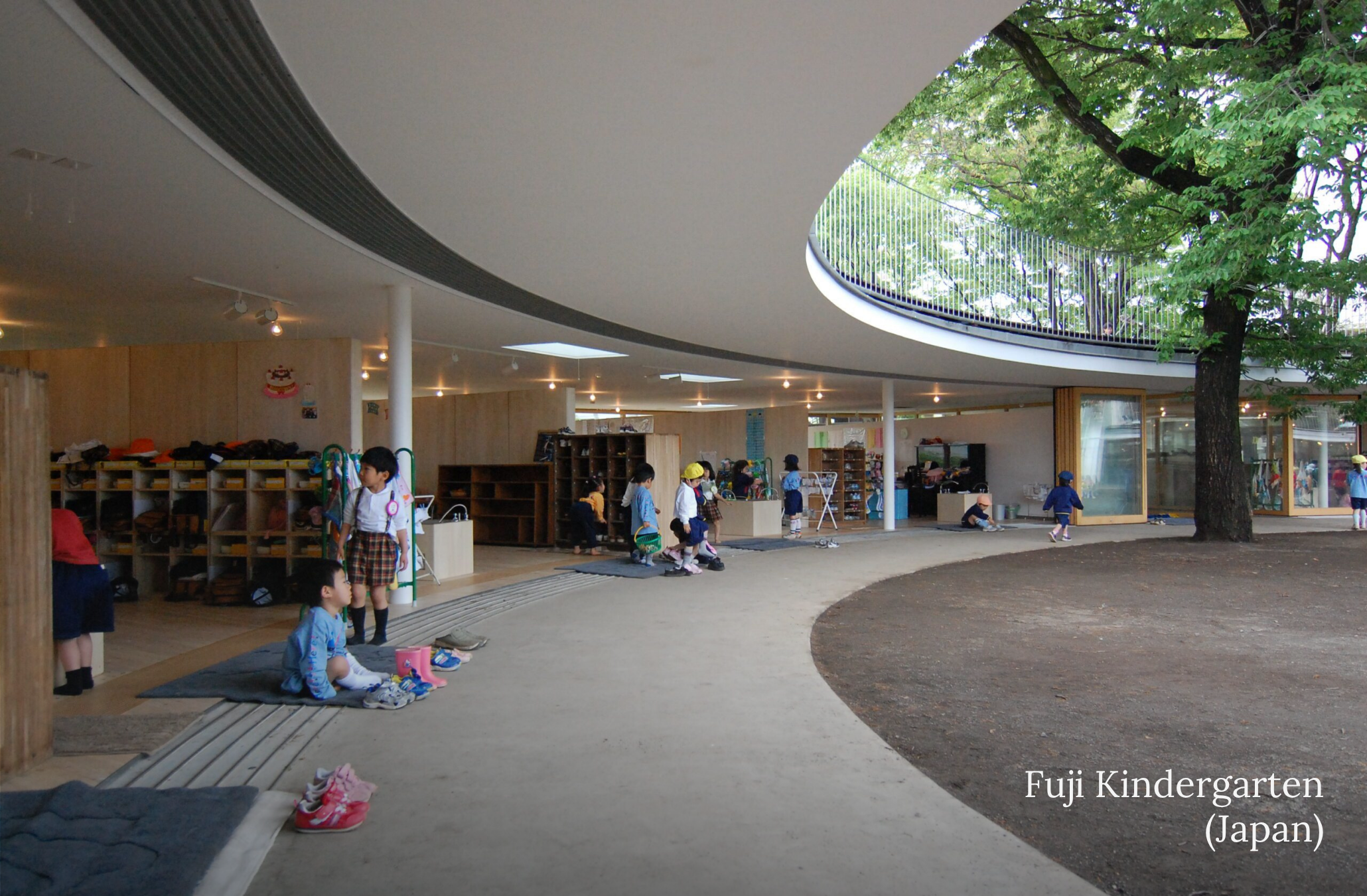
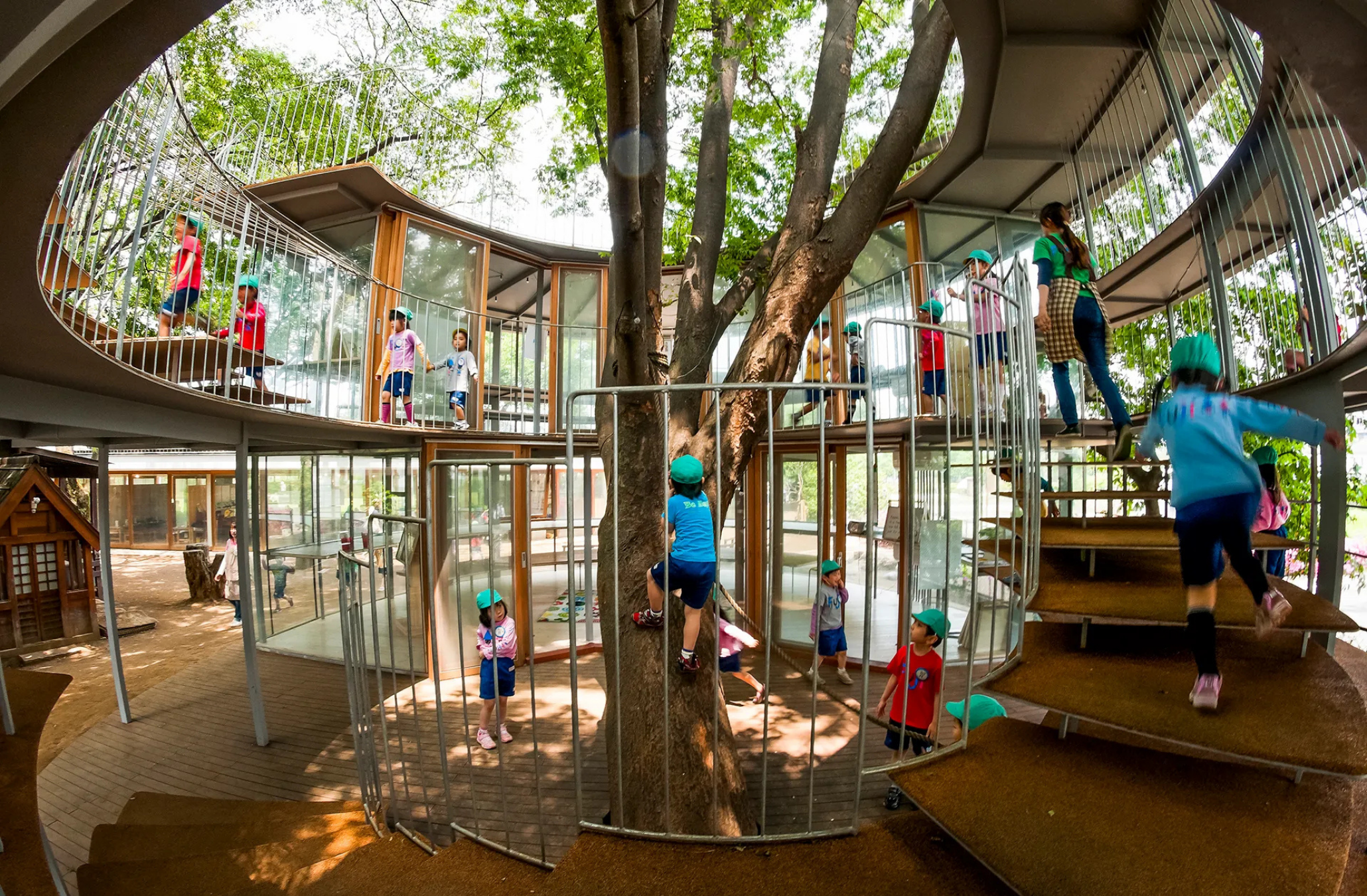
A similar child-centred approach is seen at Fuji Kindergarten by Tezuka Architects in Tokyo. Designed around children’s natural behaviours, the circular building allows students to move freely between spaces, with an endless-loop rooftop track, open connections between inside and outside, and opportunities for safe, controlled risk-taking.
Both projects demonstrate that learning environments should support different ways of engaging – giving learners autonomy over how they move, interact and participate.
Learning through nature, movement and adaptability
Another recurring idea explored through the session was the role of the environment itself as a learning tool – and how flexible spaces can support different ways of learning over time.
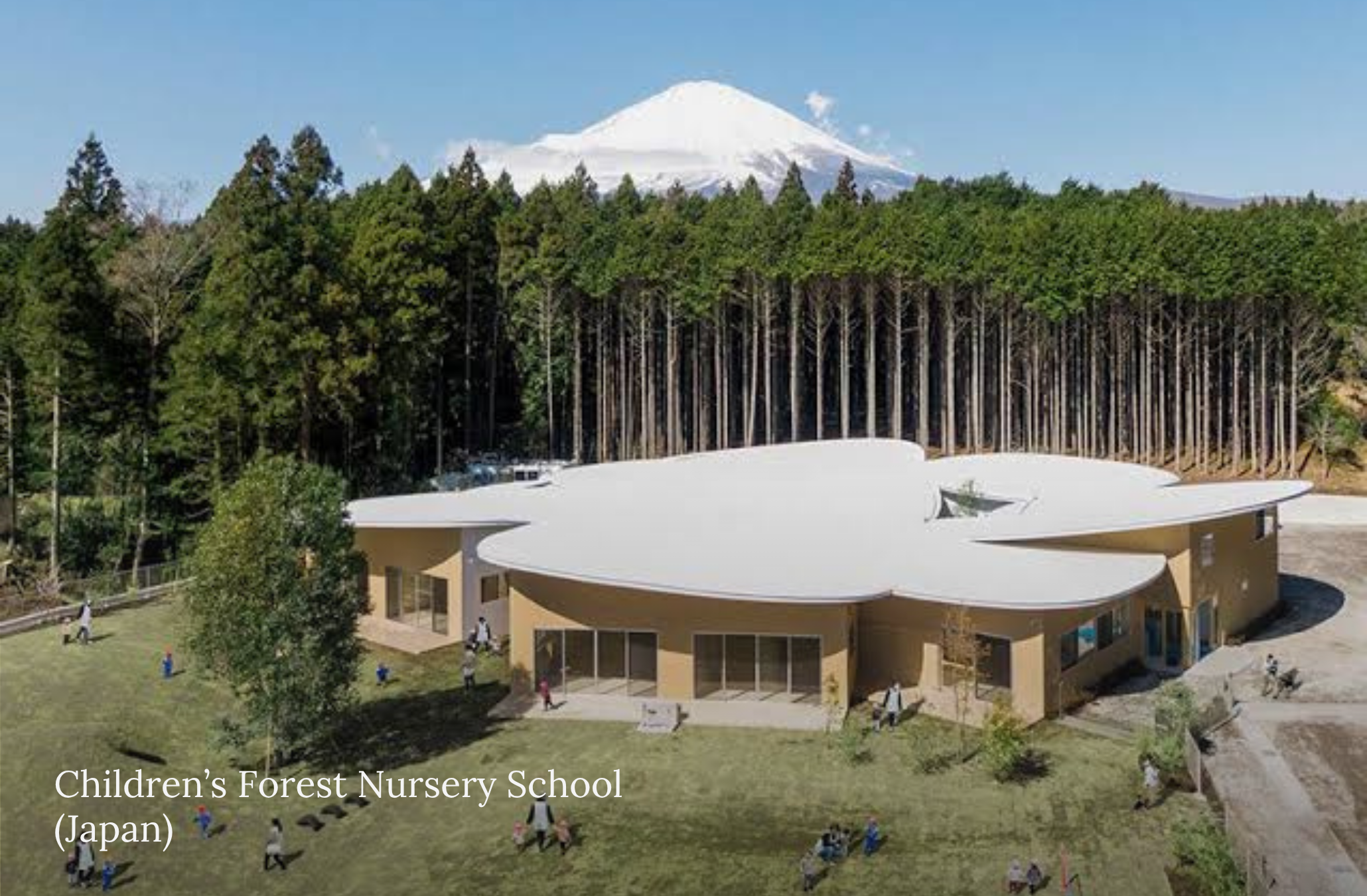
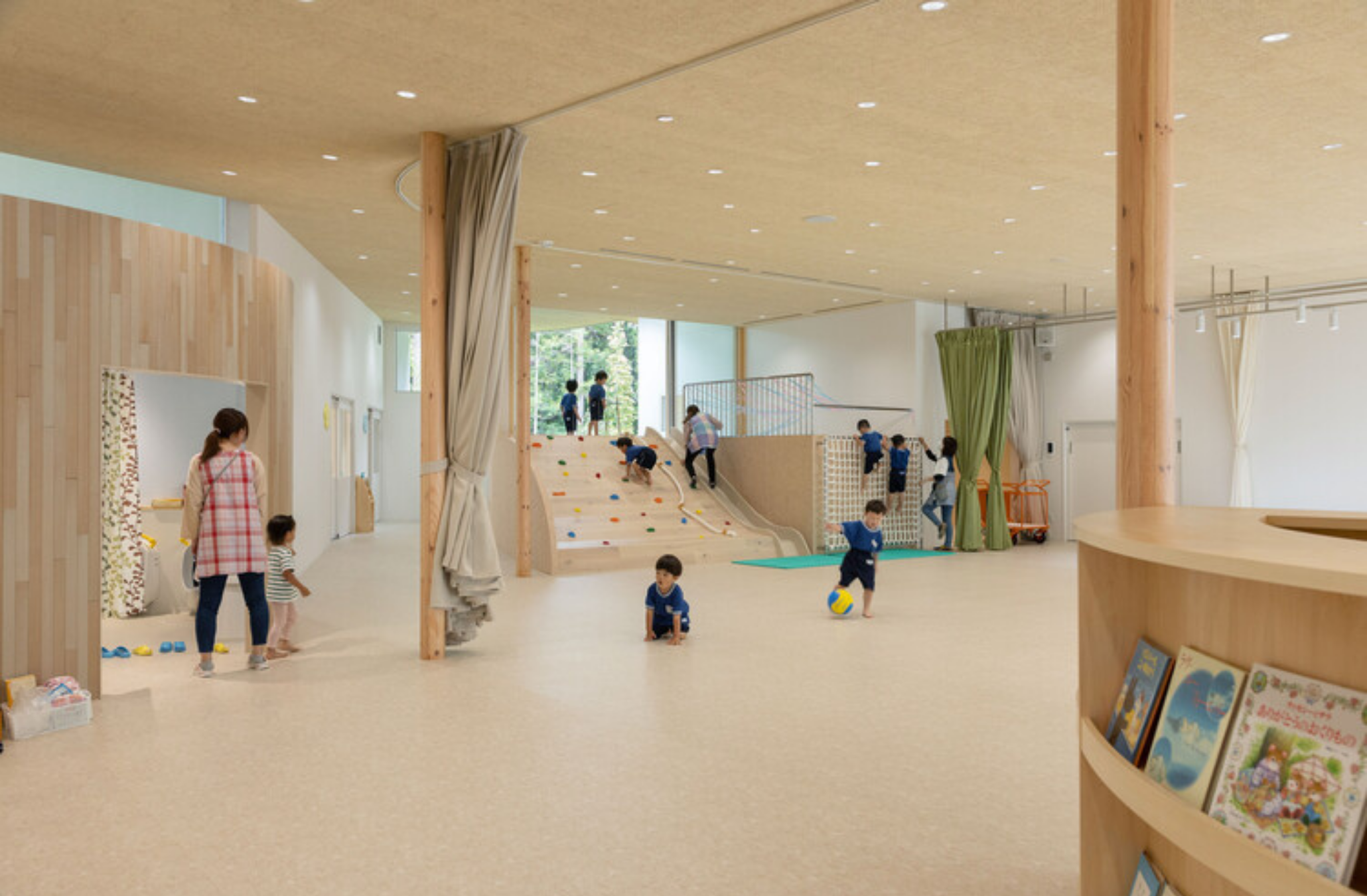
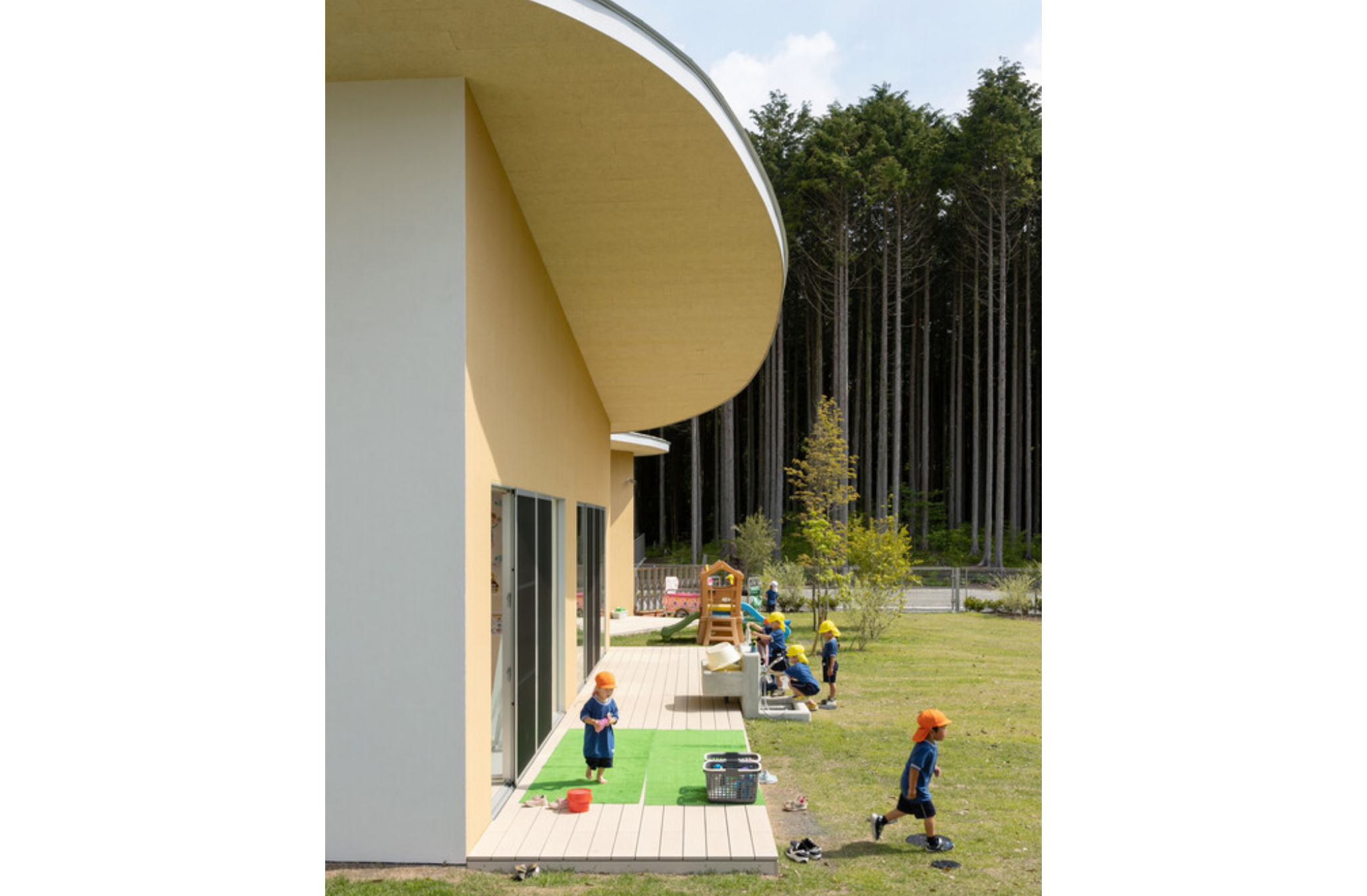
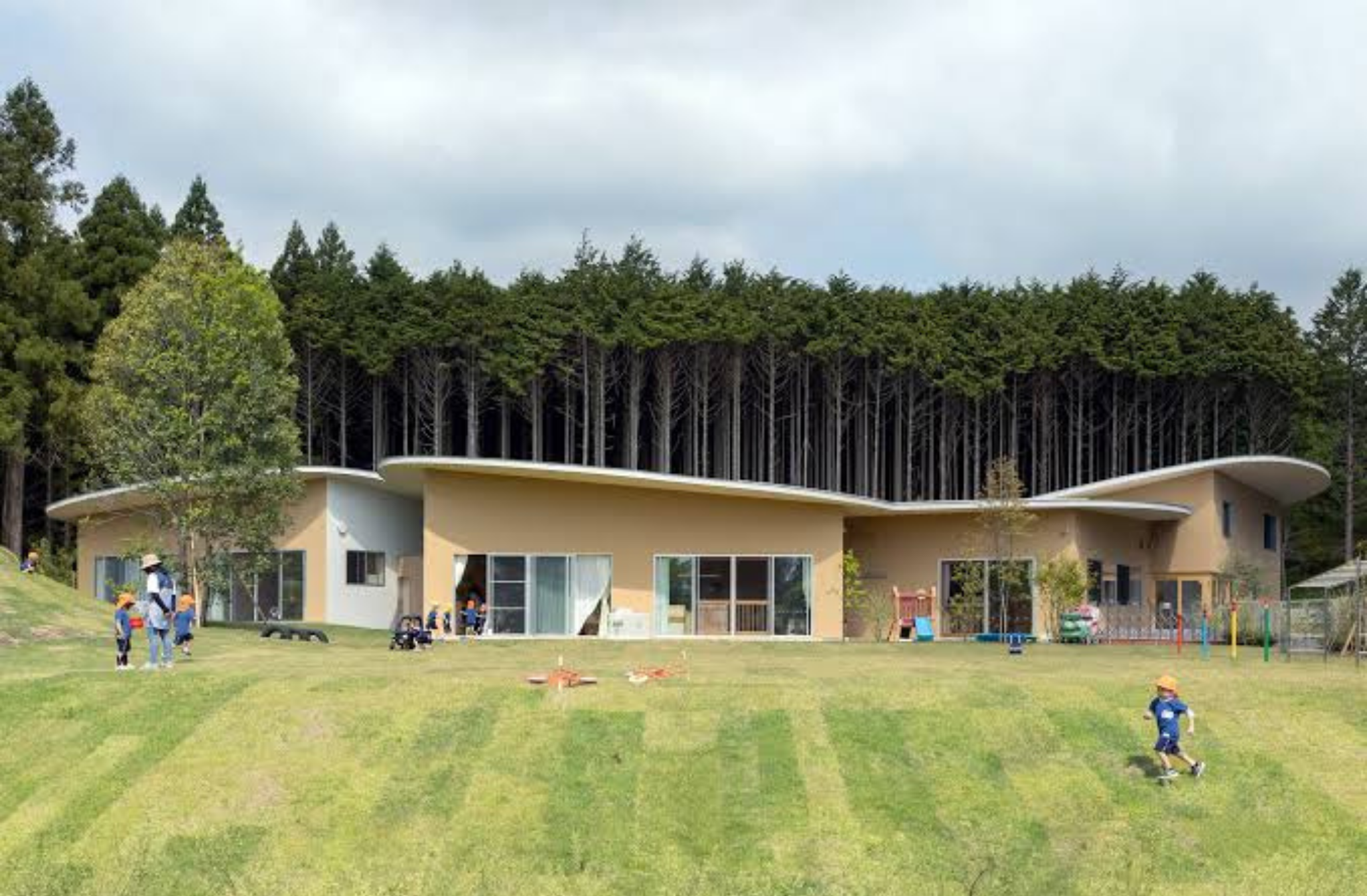
At Children’s Forest Nursery (Takashige Yamashita Office) in Gotemba, Japan, nature is not simply something viewed from the classroom – it becomes part of the educational experience.
Located at the foothills of Mount Fuji, the nursery is designed to immerse children in their surroundings. Individual classroom spaces sit at different levels and angles, each framing unique views of the landscape, while a cloud-like roof allows natural light to filter through the centre of the building.
The boundary between inside and outside is intentionally softened, allowing children to explore, move and discover through everyday experiences. Even during rainy weather, the architecture maintains a connection to the outdoors.
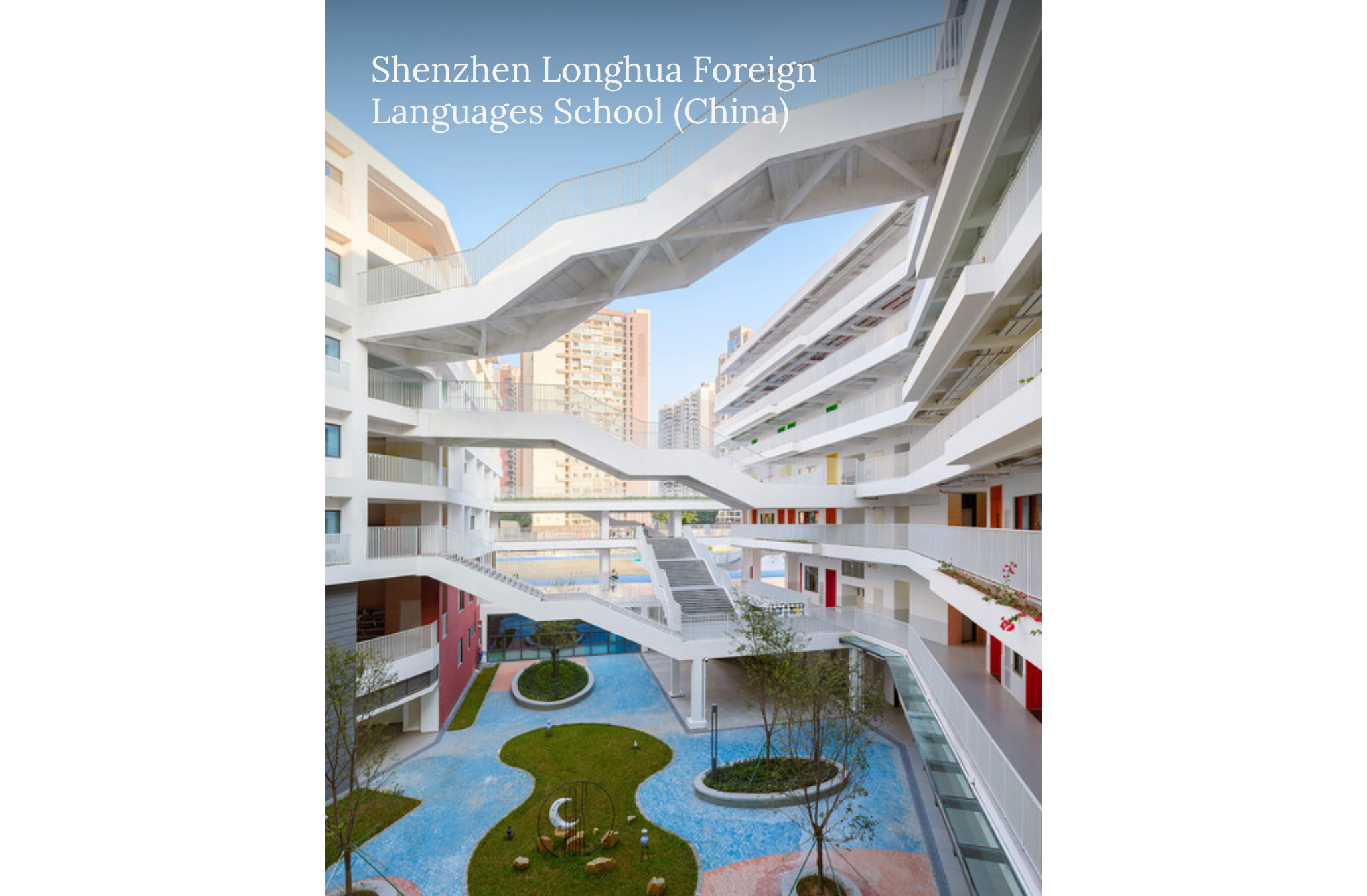
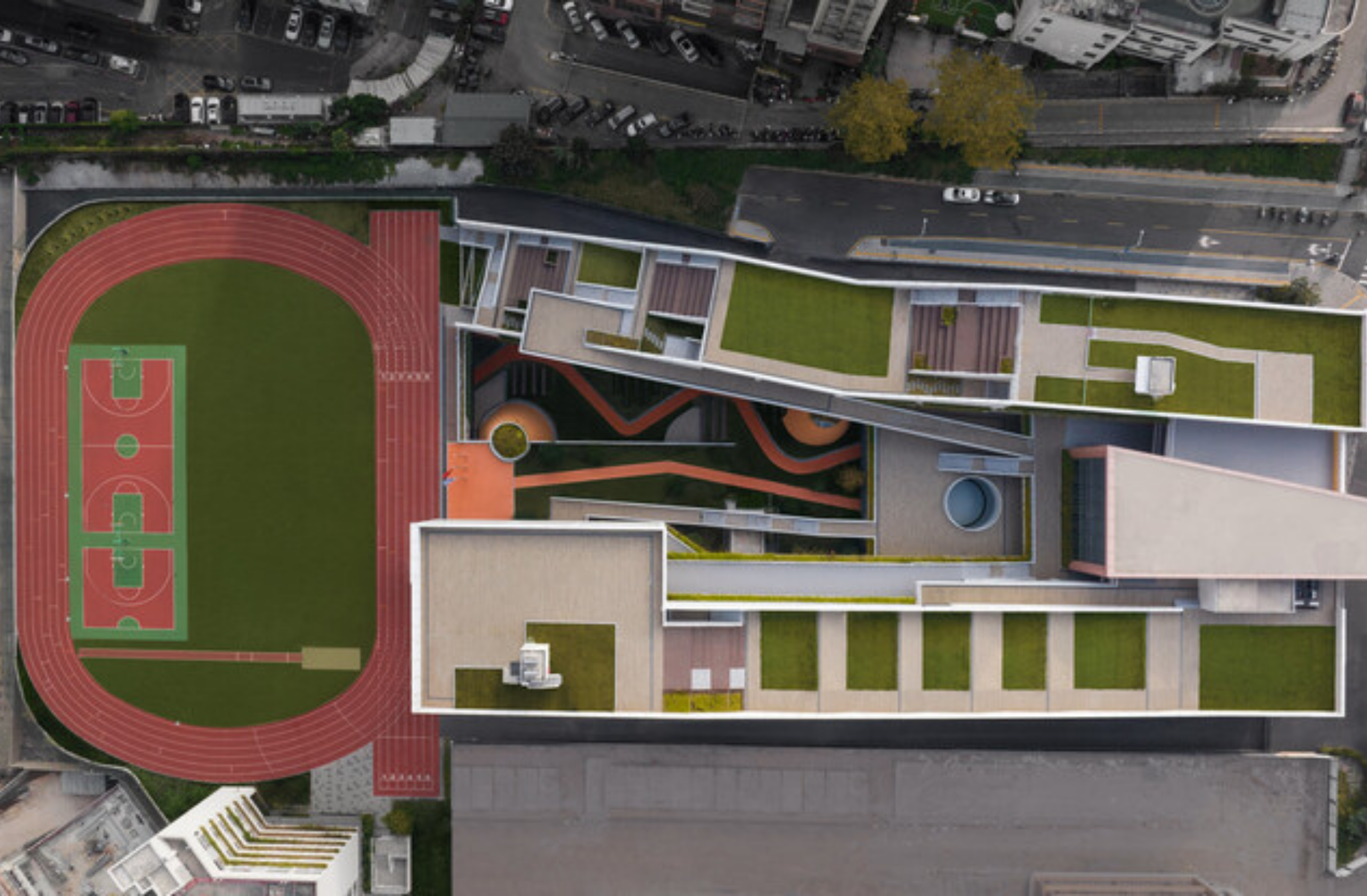
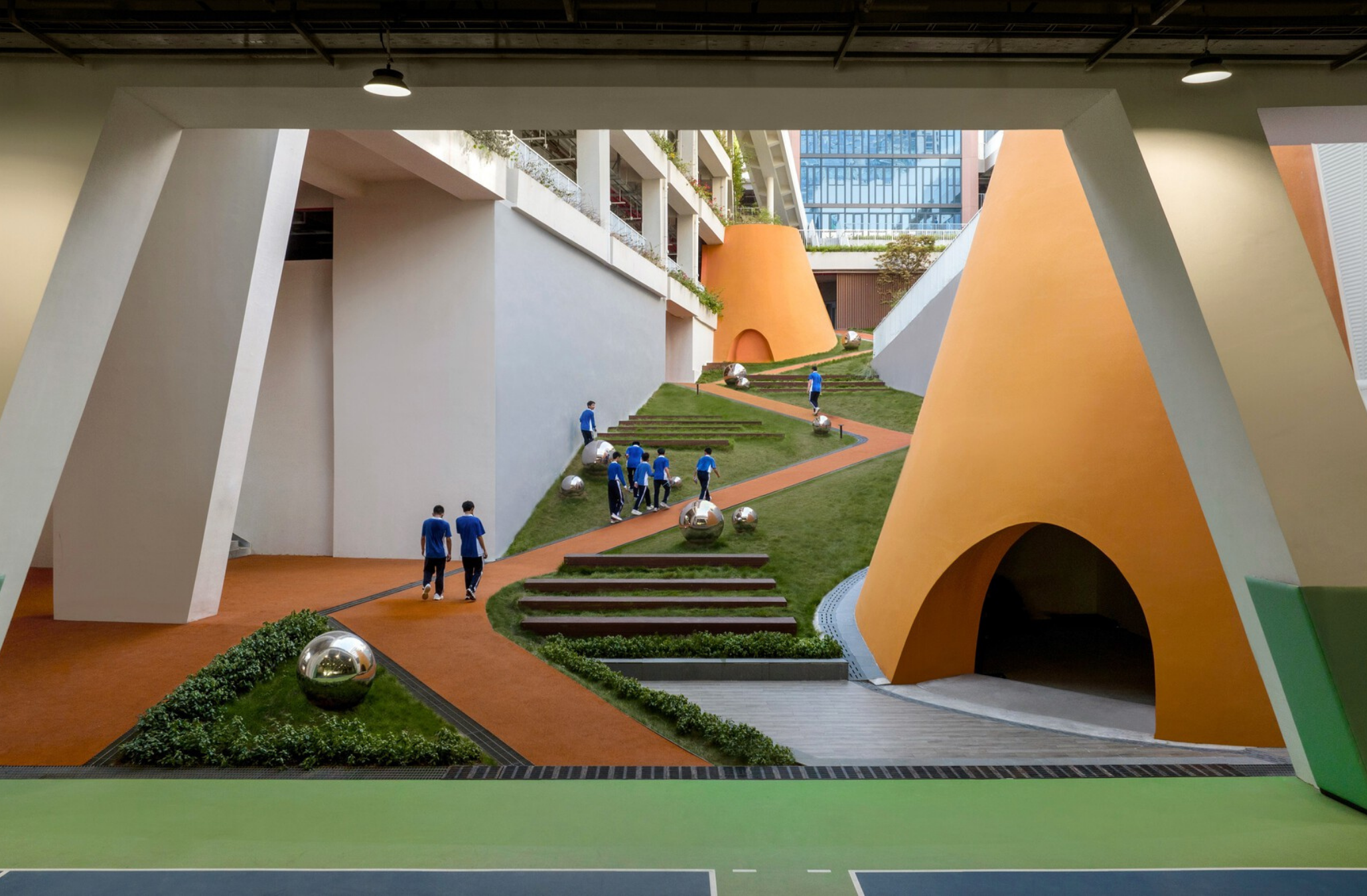
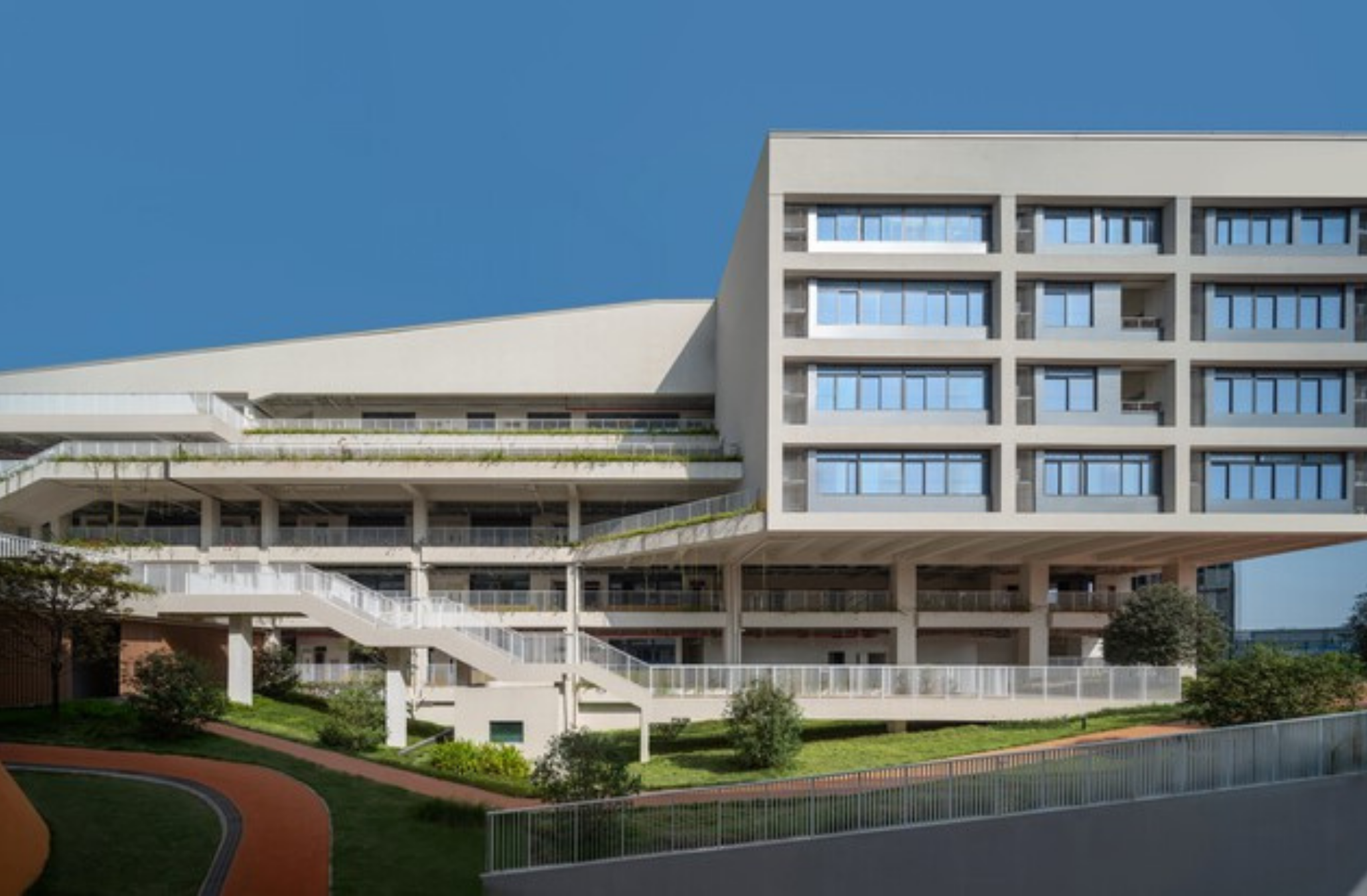
A similar approach can be seen at Shenzhen Longhua Foreign Languages School (Z&Z Studio), where openness, landscape and movement are central to the learning experience.
Located in a dense urban environment near a highway, the school is organised around the elevated “Green Spindle” – a central open-air multipurpose space that buffers traffic noise while creating a shared social heart for the school. Open-air circulation, interconnected stairs and seasonal gardens encourage students to move through a constantly changing environment, reinforcing the idea that learning extends beyond classroom walls.
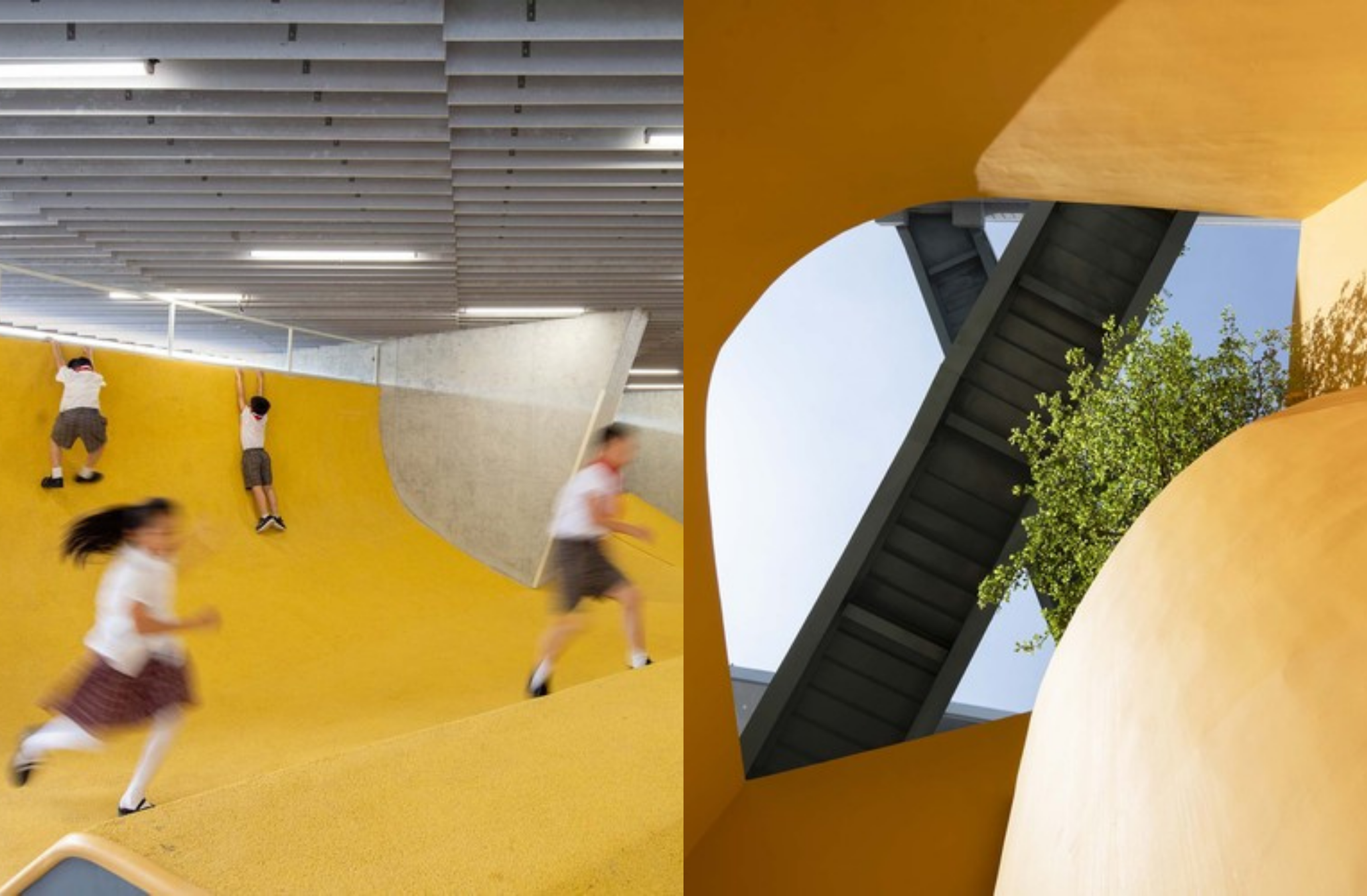
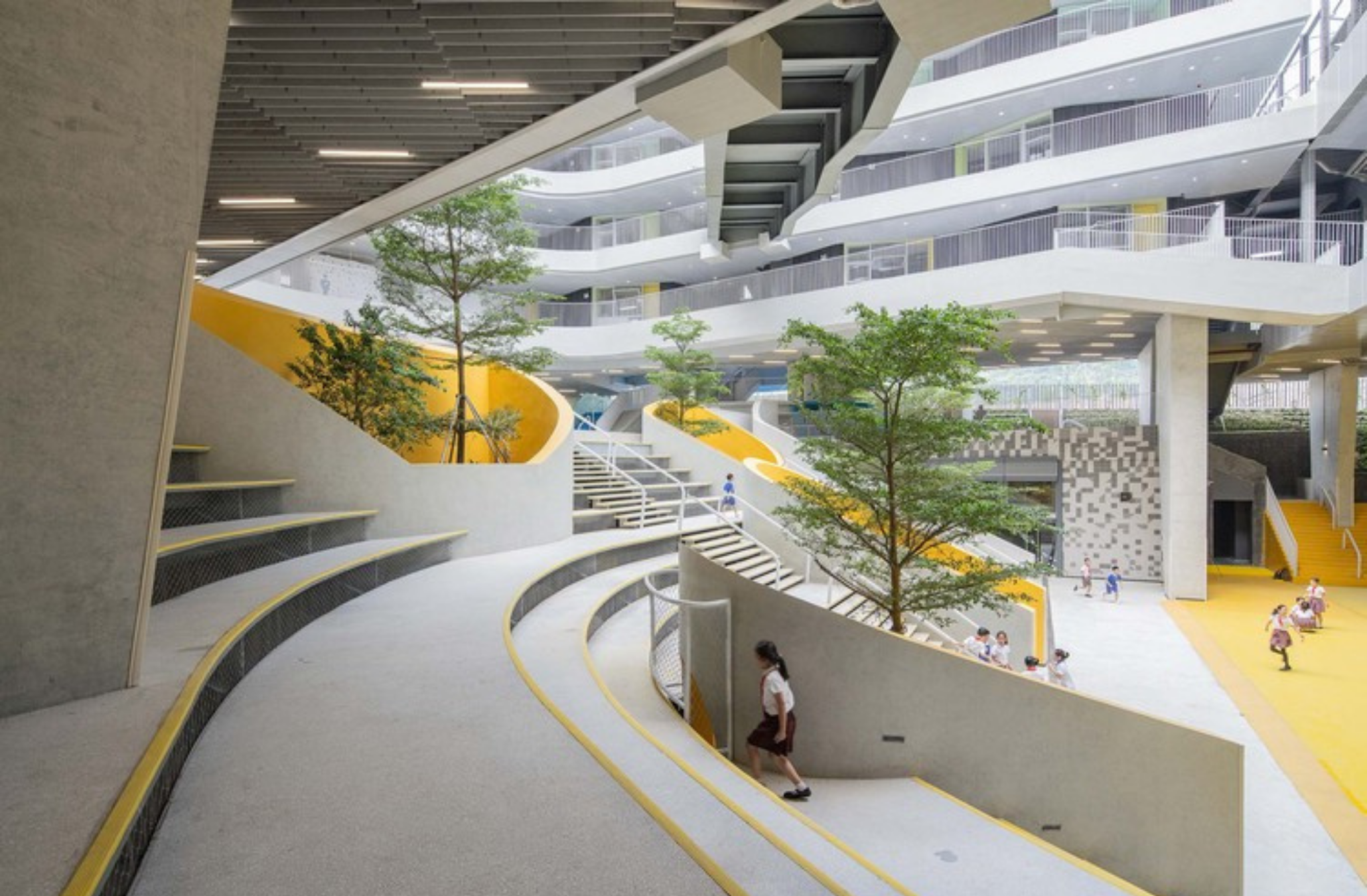
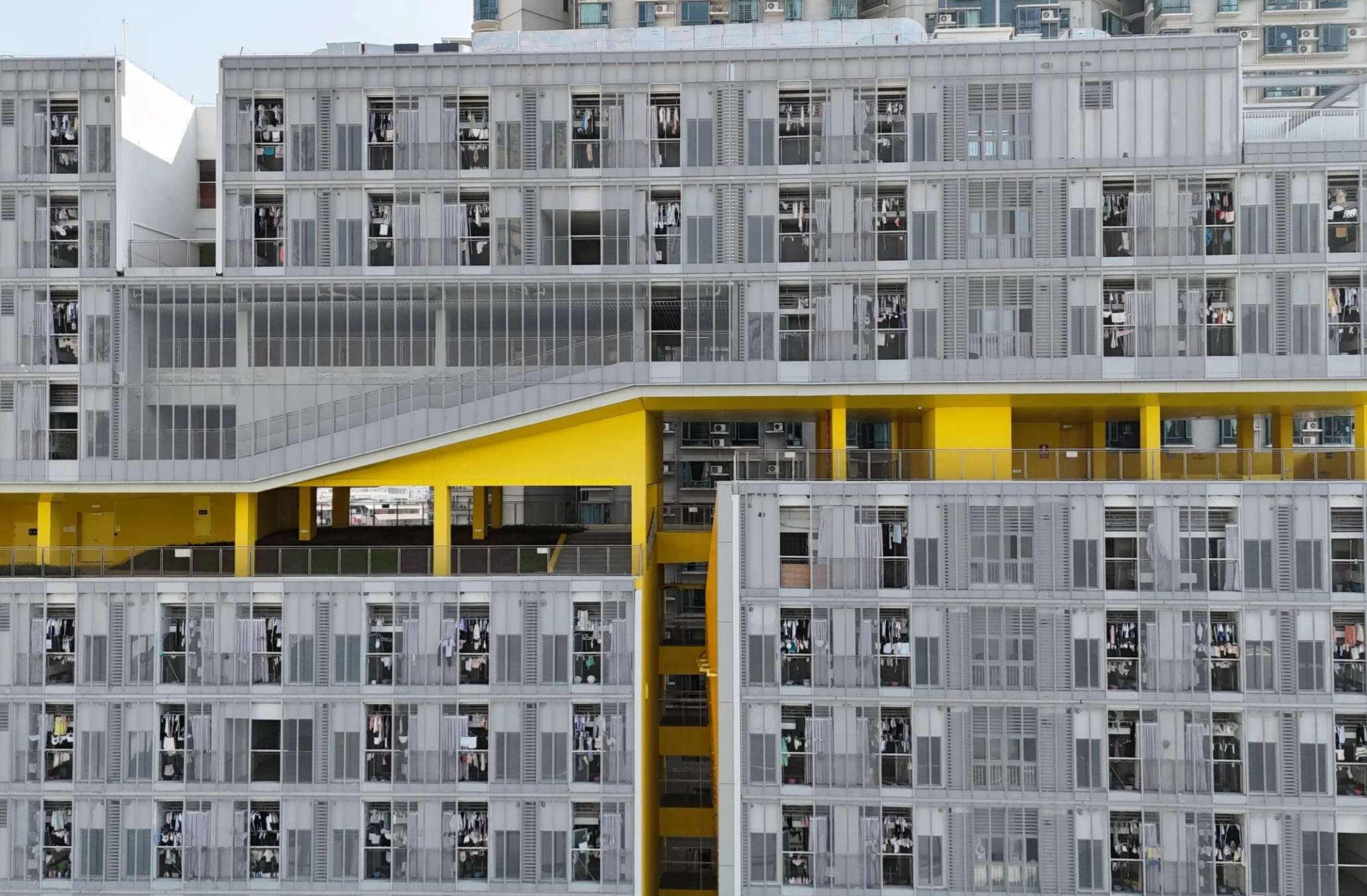
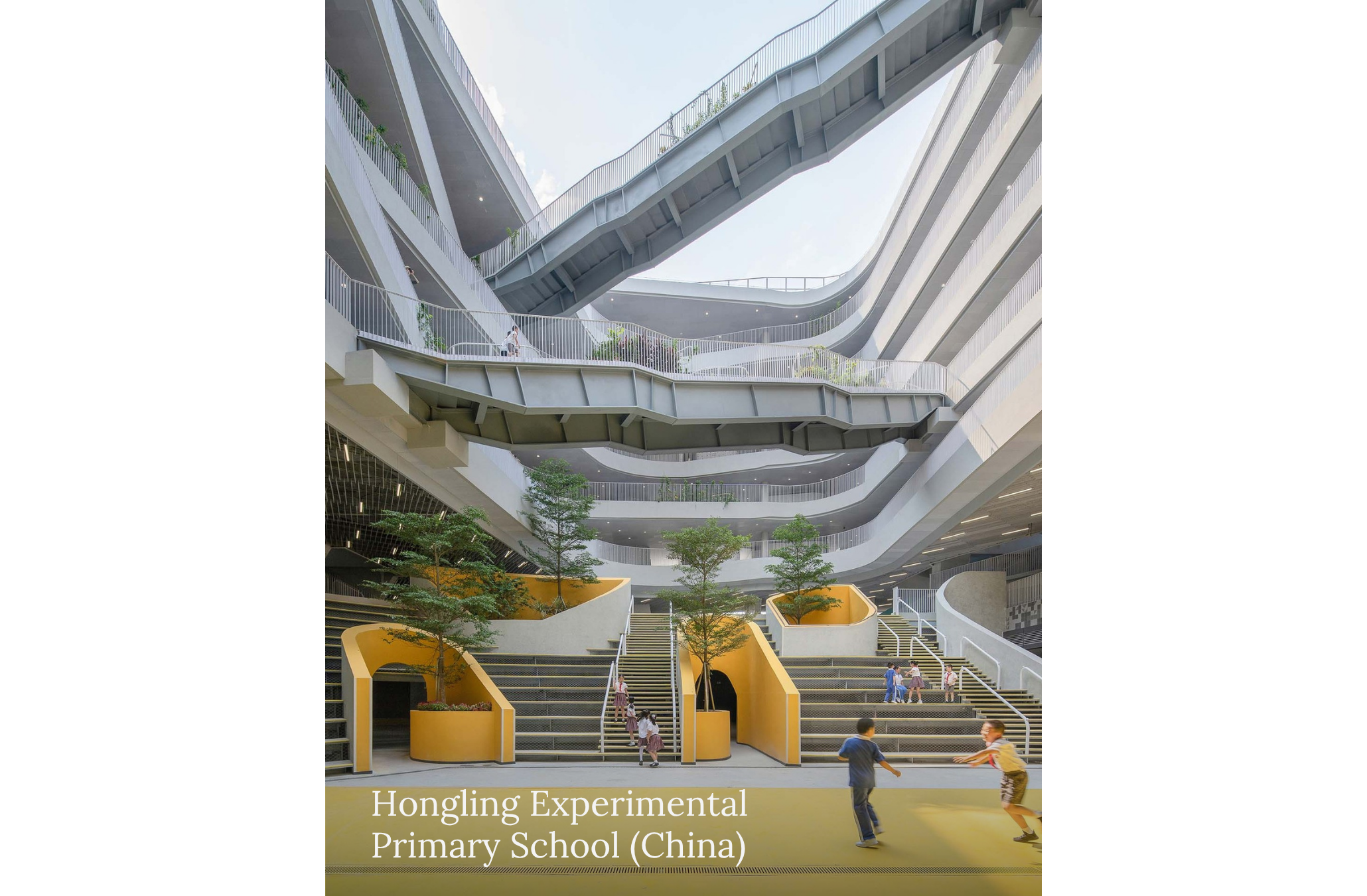
The idea of adaptability is explored at Hongling Experimental Primary School (O-office Architects) where the building challenges traditional classroom layouts through flexibility and reconfigurability.
Rather than conventional rectangular classrooms connected by corridors, the school uses a hexagonal classroom grid with retractable walls, allowing spaces to open, combine and adapt to different teaching and activity modes. The layout eliminates unused corners while creating generous informal spaces between classrooms for collaboration, gathering and independent learning.
The building’s terraced form responds to its surroundings like an inverted landscape, with porous central areas encouraging natural airflow and a strong connection between movement, space and environment. Colour accents, integrated vegetation and shared spaces – including a central basketball court – further reinforce the idea of the school as a place for exploration and interaction.
Together, these projects demonstrate how architecture can create learning environments that are not static, but responsive – allowing students and educators to adapt spaces around different needs, activities and ways of learning.
Learning through culture and community
Lifelong learning extends beyond formal education spaces. It also happens through knowledge-sharing, cultural connection and community.
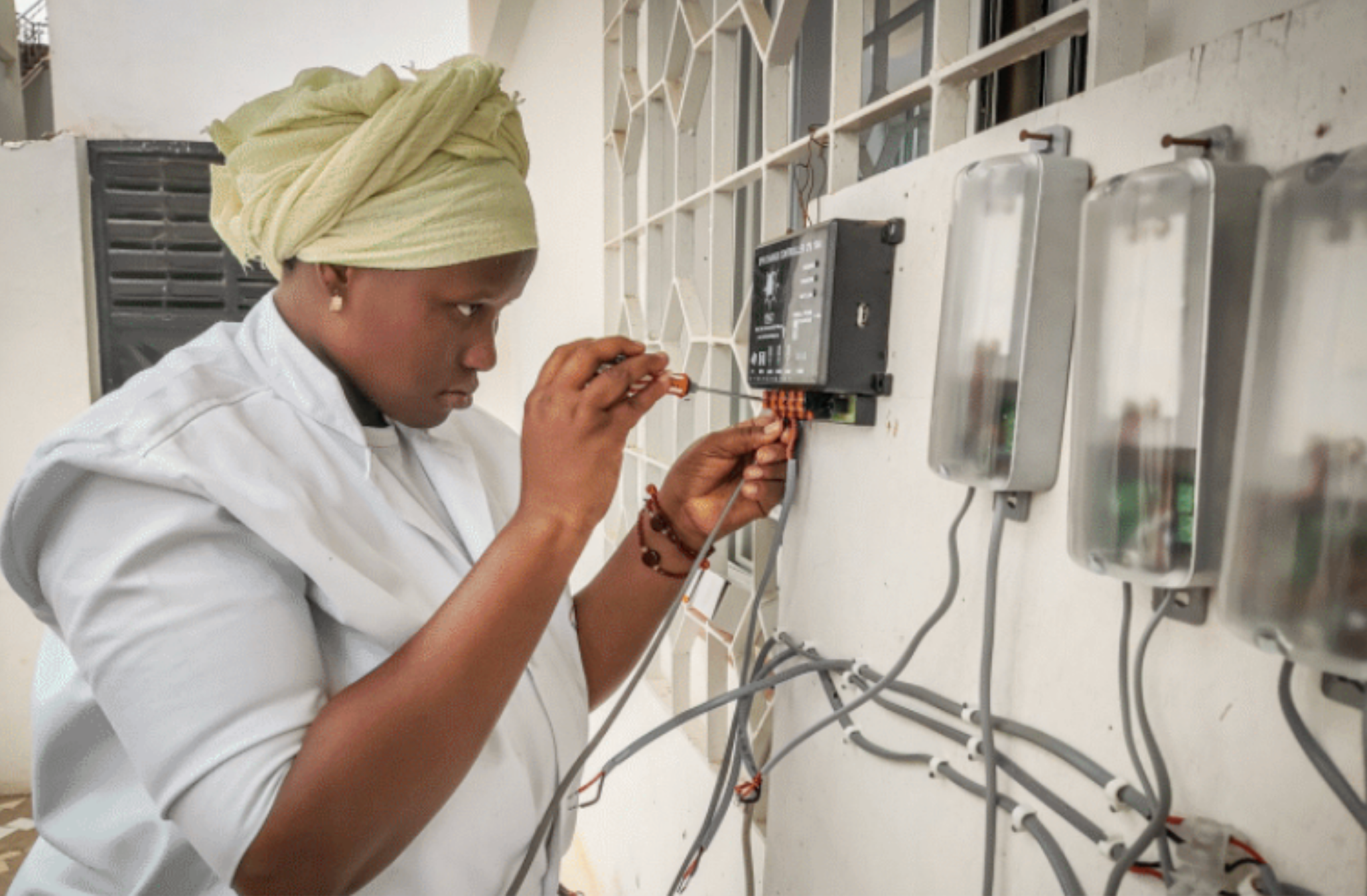
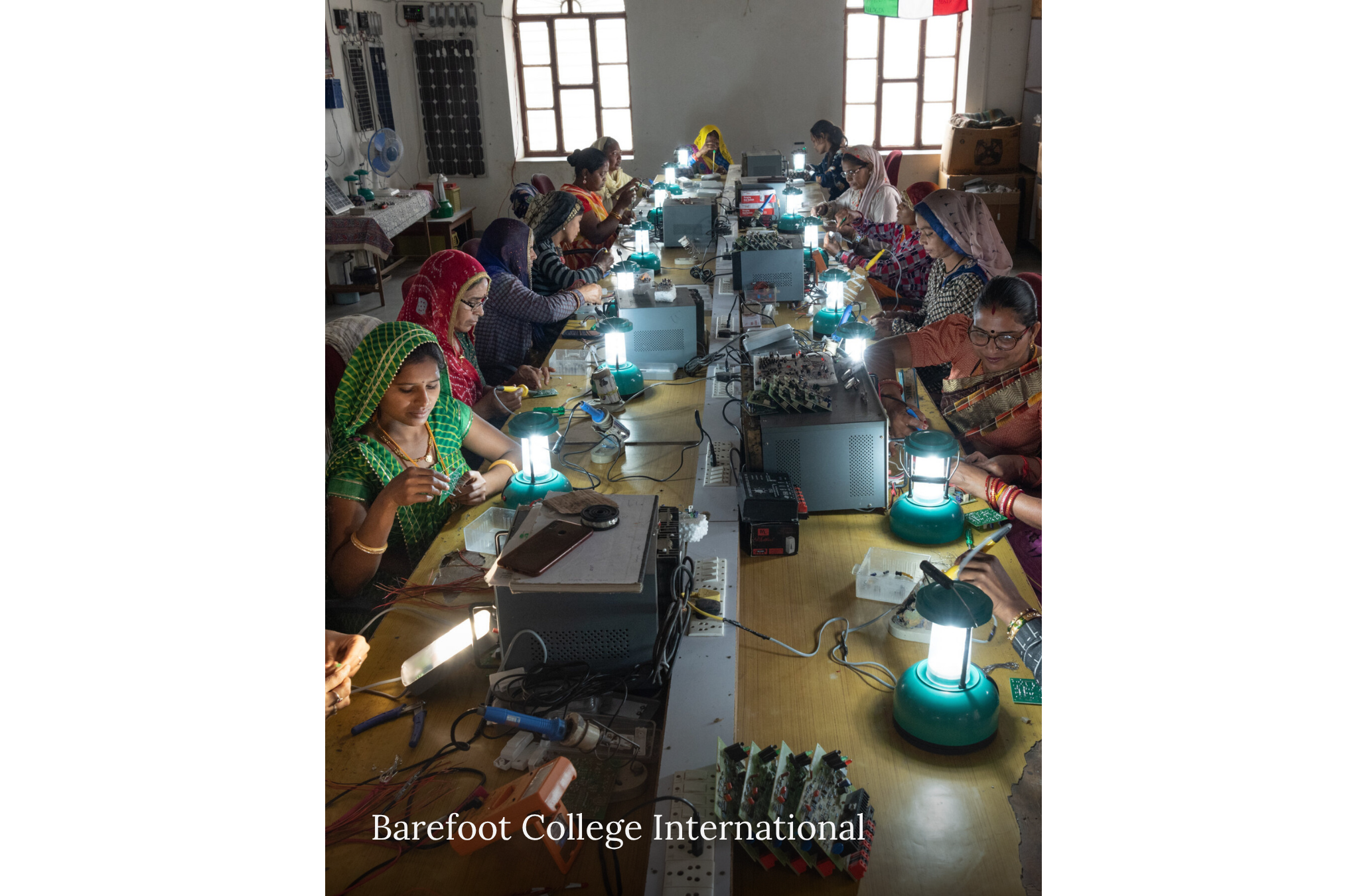
Barefoot College International demonstrates this through a model of learning that exists without a traditional building. Across 98 countries, the organisation trains women from remote communities to become solar engineers, combining technical skills with business literacy and community development.
The knowledge gained is then carried back into local communities – improving access to electricity, supporting health outcomes and enabling future generations to learn.
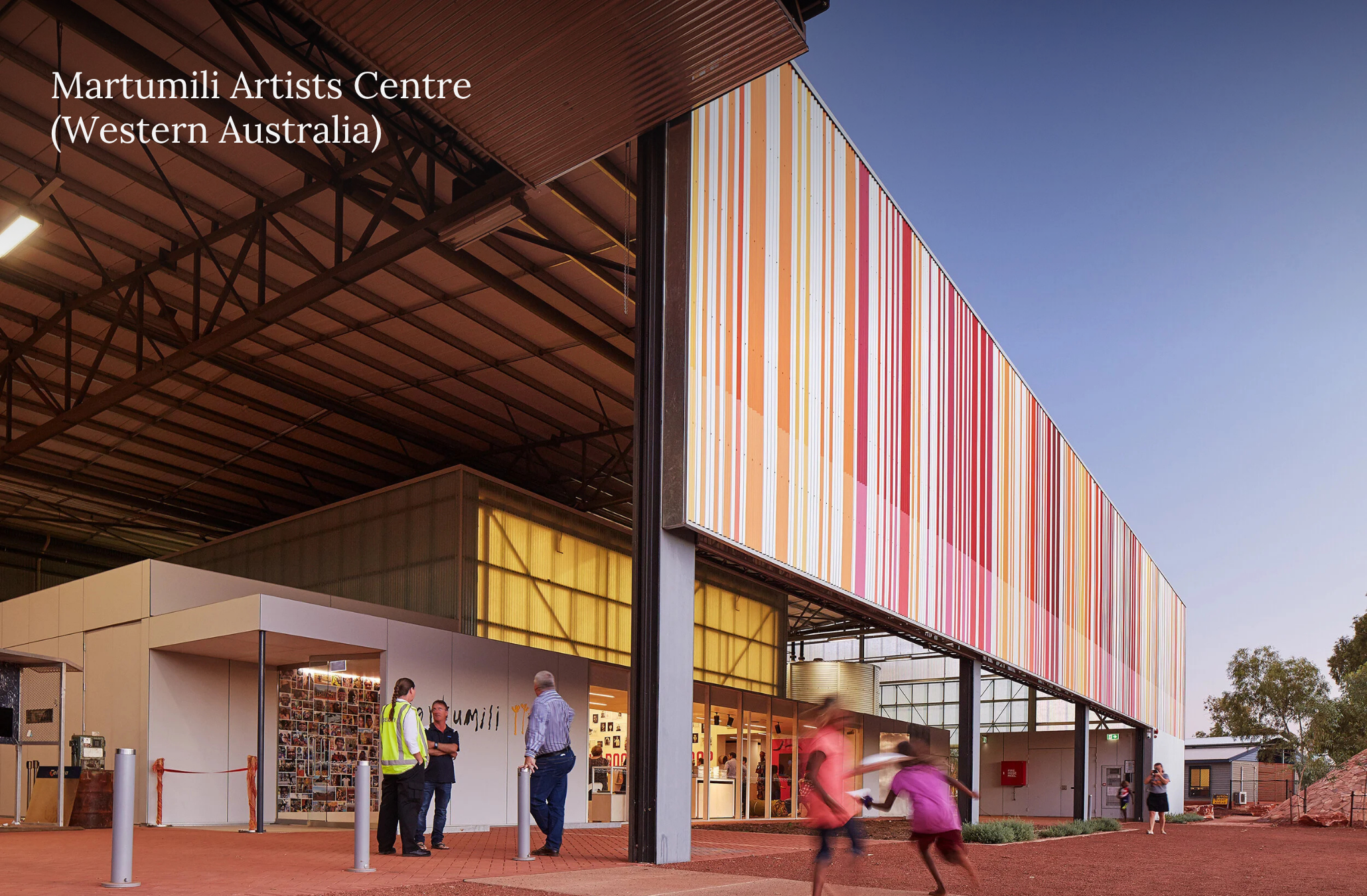
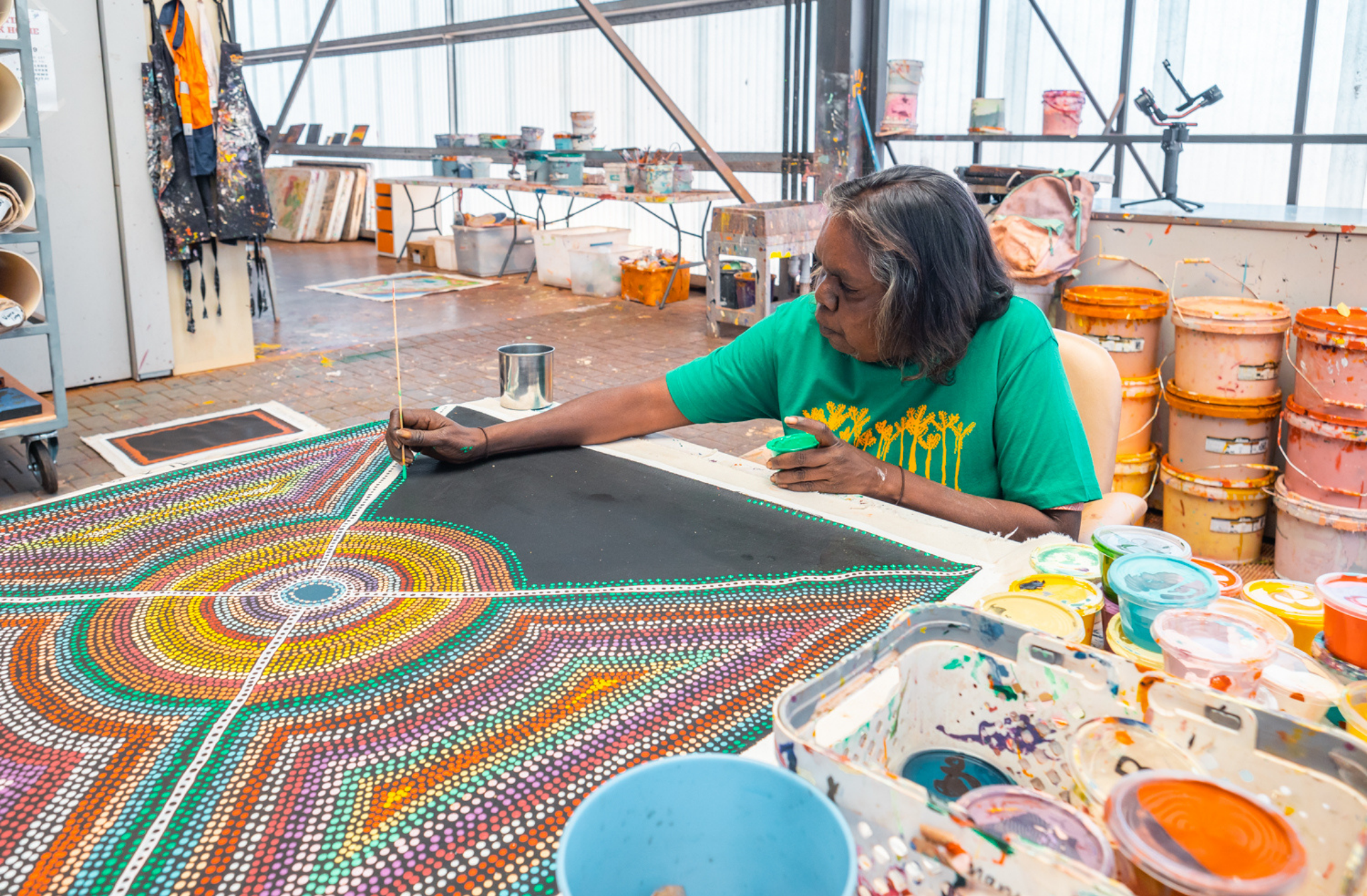
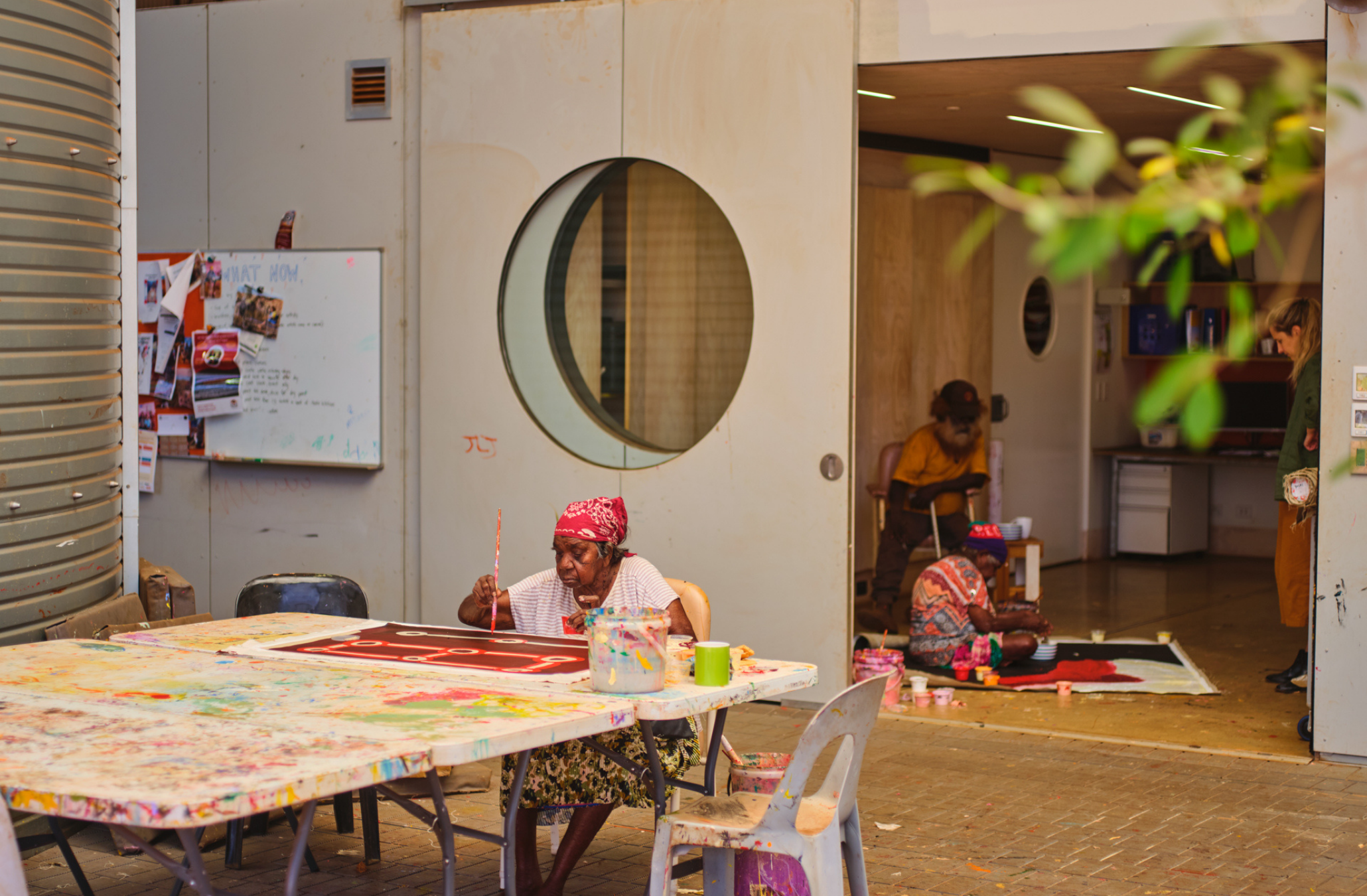
Closer to home, Martumili Artists Arts Facility and Gallery (Officer Woods Architects) in Newman, Western Australia, provides a space for senior Indigenous artists to create, share knowledge and connect generations through culture.
Designed as a place “the old people can be proud of”, the facility avoids an institutional feel, instead creating a welcoming community hub where artists can gather, teach and inspire one another.
Together, these projects highlight that learning is not only about acquiring new skills – it is also about preserving knowledge, sharing stories and strengthening communities.
Designing spaces that inspire learning for life
Across each of these projects, architecture plays an active role in shaping how people learn, connect and grow.
Whether supporting student independence, encouraging exploration, preserving cultural knowledge or enabling community-led change, these examples demonstrate that learning environments are not defined by classrooms alone.
They are shaped by the spaces, relationships and experiences that surround us throughout our lives.
When we design with lifelong learning in mind, we create spaces that support growth, connection and discovery at every stage of life. If you’d like to discuss how thoughtful design can shape learning experiences, reach out today to start the conversation.