
If sport is the great connector, why isn't it visible and woven into our cities?
Indoor soccer used to be part of my weekly routine.
Years ago, I used to play just ten minutes from where I worked at the time, an old industrial building in Fortitude Valley had been repurposed into a sports centre. It was close enough to walk or catch the bus, and the games easily slotted into my day.
When that venue was knocked down for commercial offices, we moved to West End, which still worked: I could take the ferry, jog to the game, and return to campus in time for a shower and class. But that too was demolished.
The next spot they played at was even further away. Some 30 minutes drive in traffic. Eventually, I stopped playing.
What began as a minor inconvenience became a personal case study in a bigger urban question: Where is sport going in our cities—and how do we keep it close enough for people to stay involved?
Sport is arguably the most democratic, universal connector we have yet it rarely gets put on display in the same way.
This year’s announcement that 2026 Queensland Day will anchor a new “mega Queensland Day of Sport” is a reminder of that. Currently, there are four major Queensland games planned across AFL, NRL, and Super Netball in an eight-hour statewide showcase.
It’s a great headline. A manufactured tradition-in-the-making. But like all big events, it risks becoming a spectator moment rather than a participation one. That’s unless we rethink what sport looks like at street level.
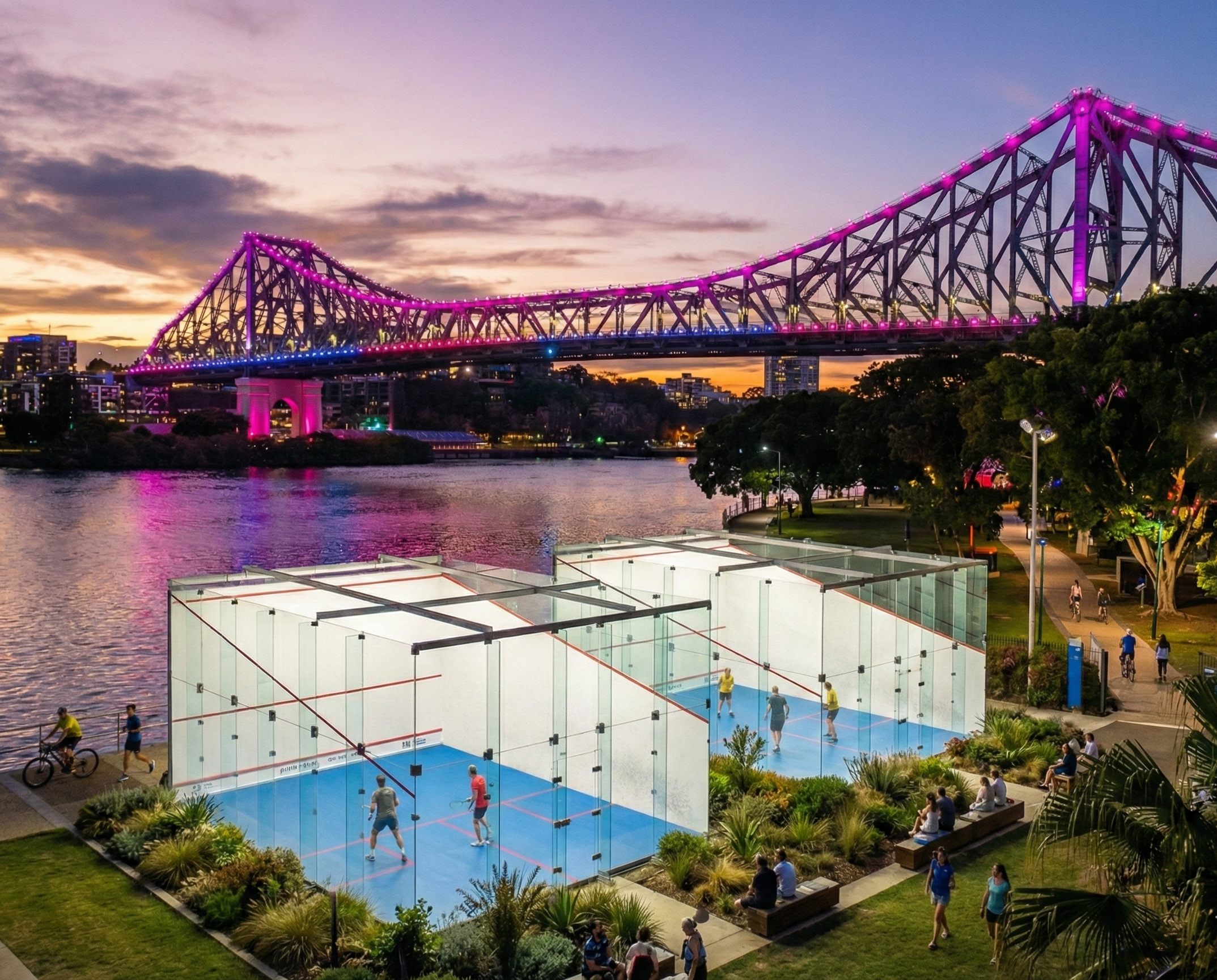
Vision for Captain Burke Park - Modular outdoor squash courts are growing in popularity in the US and help put the sport on display (Source: Open Architecture Studio)
What if sport was something you lived around?
At Open Architecture, we’ve been exploring a simple but radical provocation: What if we treated sport like retail?
Retail design obsesses over visibility, flow, and dwell time. Why shouldn’t sport do the same? What if courts were something you passed by on the way to work? What if activity was on display—compelling, accessible, and impossible to ignore?
That requires rethinking where and how sport lives in the city. Not for a single day for Queensland Day, but always.
If we make sport impossible to avoid, participation becomes inevitable.
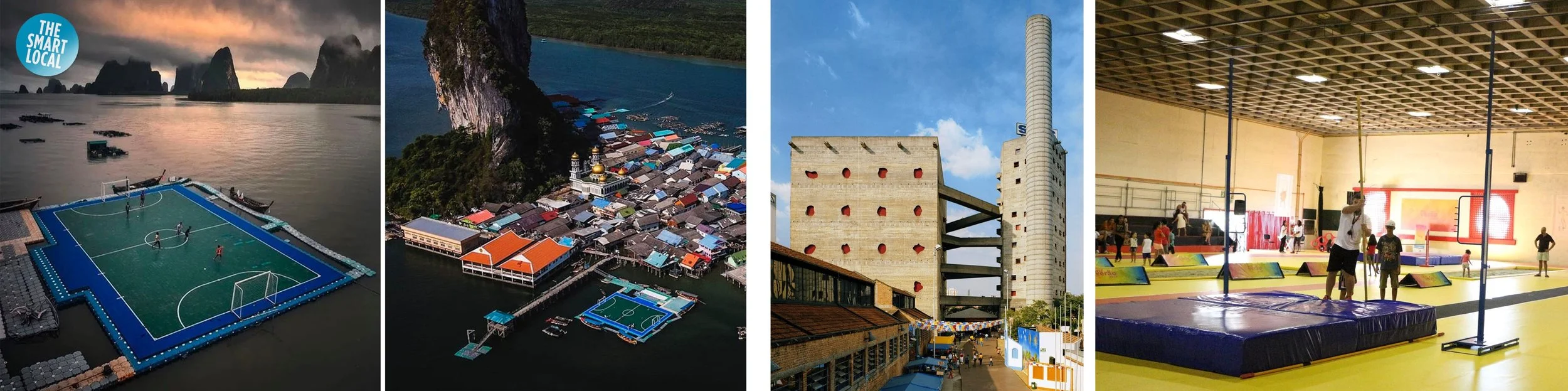
Thailand's Koh Panyee Floating Soccer Field, and the vertical indoor sports centre in Sao Paulo, Brazil
The power of “up, not out”
If we want more sport at our doorstep, going vertical is one of the most efficient ways to get there. In Rio de Janeiro, Lina Bo Bardi’s SESC Pompeia reimagines the idea of a sports precinct entirely. Constructed from repurposed industrial sheds, the project stacks sports courts vertically inside a concrete tower that’s interspersed with windows and footbridges. This creates a lively, visible athletic ecosystem in the middle of a dense urban neighbourhood.
A similar spirit animates Copenhagen’s Sports Tower by WERK Arkitekter. Rising nearly 70 metres high, the tower packs five full-sized sports fields and a spiraling 440-metre running track into a tight urban footprint. It offers six to twelve times more play space per square metre than traditional ground without sacrificing daylight, airflow, or public connection.
Sure, these projects make great use of vertical space. But they also put sport on display, elevating it (literally and culturally) as part of everyday city life. From São Paulo to Copenhagen, the message is the same: sport belongs in the city, not outside it.
We’re seeing that thinking play out locally, too. In Brisbane, the Turbot Street underpass—once little more than leftover infrastructure—is now the CBD’s first free multi-sport court. On any given day, you’ll find people shooting hoops, playing cricket, or getting in a quick pickleball match after work.
It’s proof of concept. Reclaimed spaces can become sporting assets. So why stop there?
Queensland Day provides the perfect stage to push this further.
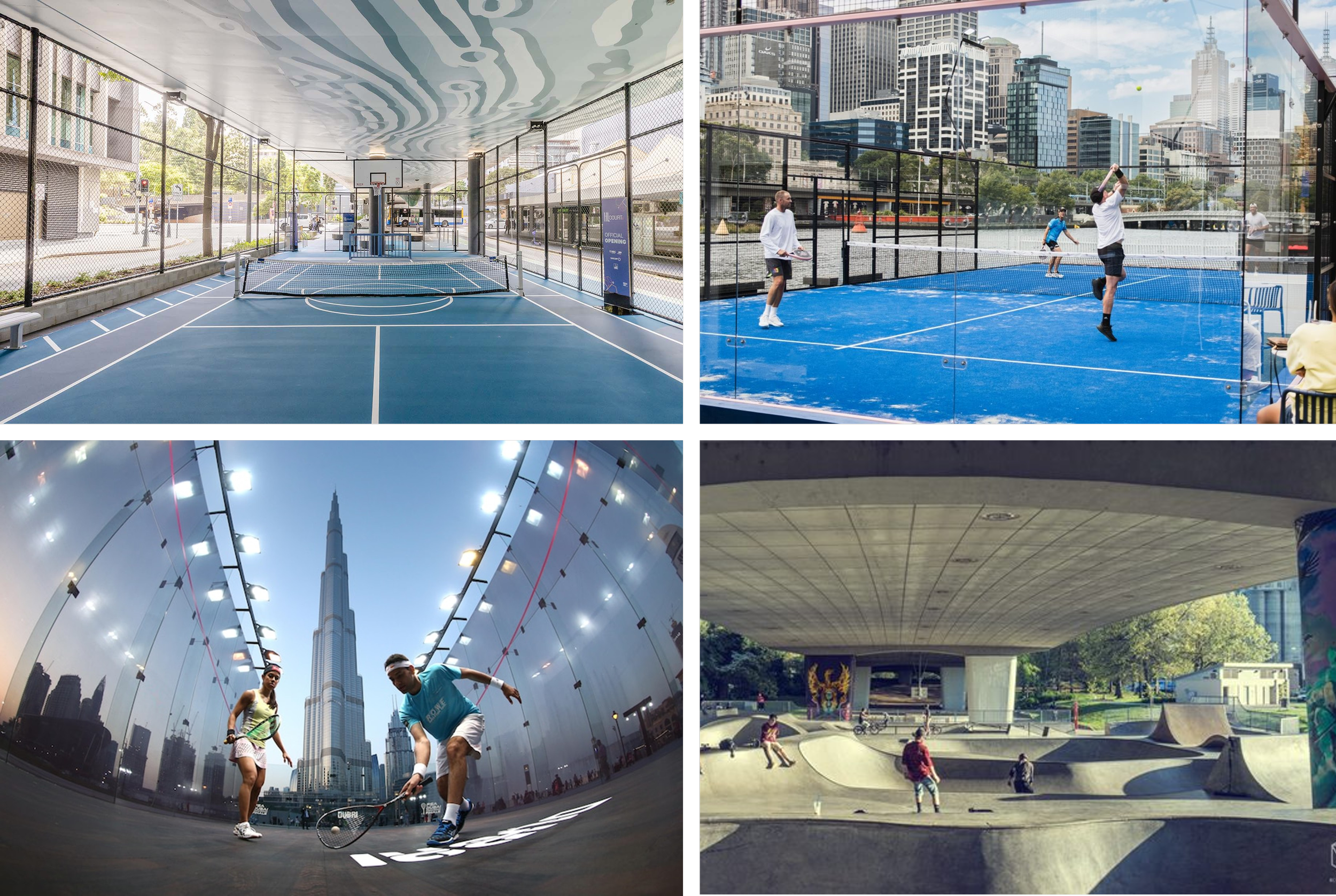
L-R Turbot Street Underpass Courts by Vee Design, Australian Open Yarra River Pickleball, Burj Khalifa outdoor squash courts, WJ Skate Park, Oregon USA.
Why grassroots activation actually matters
If Queensland Day becomes a week where people can see, feel, and try sport in unexpected places, it changes everything. Imagine if we put putt-putt courts on Queen Street. Or tennis courts on the Paddington water tower. Better yet, squash courts on the river? These are all achievable with some innovative thinking.
Here’s why we should: participation naturally rises when play is convenient and embedded into the rhythm of daily life. People engage because it’s local and compelling—close enough to step into without having to pick up the car.
At the same time, community begins to form. Sport remains one of the last truly universal social binders, cutting across age, class, culture.
If Queensland Day is going to become part of the cultural calendar—the way Anzac Day or Riverfire evolved—then it needs more than a day. Not by replacing the big-ticket events, but by grounding them in everyday play.
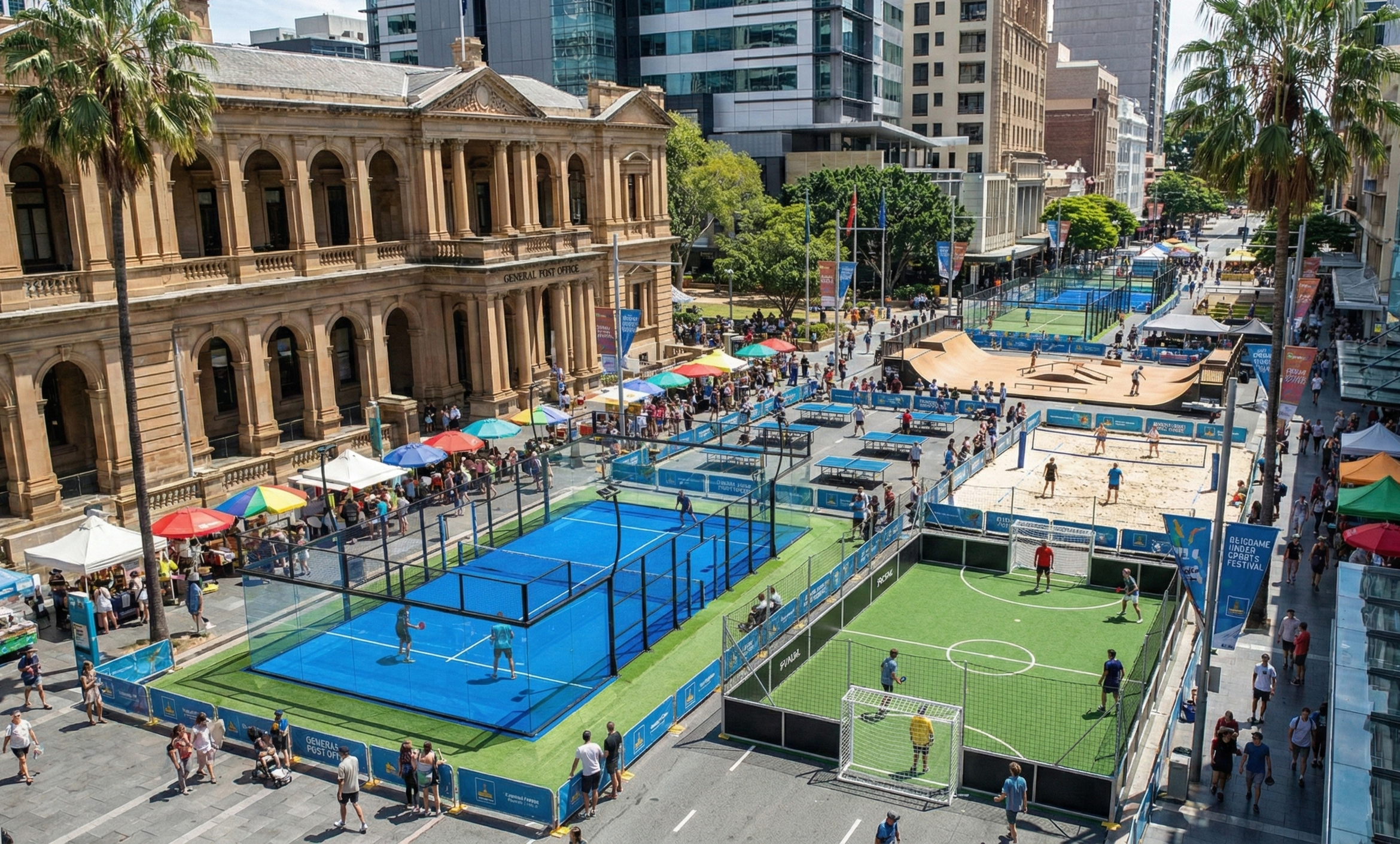
Queen Street Vision - Sports festival with pop up courts as a Queensland Day activation (Source: Open Architecture Studio)
We’ll need to learn from cities like Paris where they developed a 40-kilometer Green Belt Sports Trail that connects Olympic sites with local communities, blending sports, culture, and biodiversity.
Or Singapore, which has a Sports Facilities master Plan as part of their Vision 2030 plan to provide Singaporeans with innovative, accessible, affordable and relevant sports facilities within a 10-minute walk from their homes – creating a network of quality sporting facilities across the city.
At Open Architecture Studio, this is the work that energises us: rethinking how sport lives in the urban landscape, maximising overlooked spaces,and designing movement into the places people naturally gather. If you’re interested in learning more, we’d love to talk.